Autodesk · 2023–Present
Success Offerings
Success designed as a scalable system
Customers could not see meaningful differentiation between service tiers. Internally, benefits were fragmented across organizations and destinations.
Executive summary
ProblemLow return on premium features, high support volume, weak service differentiation, and benefits that were difficult to find or use.
StakesPremium benefits existed, but customers struggled to understand, find, and use them as one coherent success system.
- Role
- Manager, Digital Experience
- Mandate
- Shape a scalable digital customer-success model spanning learning, coaching, support, planning, and insights.
- Team and partners
- Design, Product, Engineering, Research, Analytics, Customer Success, Support, Learning, and business leadership
- Scope
- A multi-year portfolio strategy connecting tiered Business Plan benefits across signed-in and human service experiences.
- Decision rights
- Led experience strategy and portfolio framing; influenced sequencing and buy-versus-build decisions through research, analytics, reviews, and cross-functional alignment.
Customer-success system
Learning, coaching, planning, support, and insight were organized around customer jobs and next actions.
Led the experience strategy and portfolio framing.FY30 growth strategy
Autodesk organizational growth target supported by the Success Offerings digital experience strategy; not a result personally delivered by James.
Contributed the digital experience strategy supporting the broader target.Portfolio sequence
A phased path connected benefit awareness, integrated planning, and contextual intelligence.
The system behind the screen
Customer
Customers encountered learning, coaching, support, planning, and insights as disconnected benefits.
Business
Autodesk needed clearer differentiation and a scalable path from manual service delivery to digital value.
Organization
Benefits were distributed across organizations, destinations, and operating models with no single customer story.
Leadership mandate
Shape a scalable digital customer-success model spanning learning, coaching, support, planning, and insights.
Owned and led
Led experience strategy and portfolio framing; influenced sequencing and buy-versus-build decisions through research, analytics, reviews, and cross-functional alignment.
Partnered across
Design, Product, Engineering, Research, Analytics, Customer Success, Support, Learning, and business leadership
Consequential decisions
Not a process timeline. The choices that changed the system, the tradeoffs they required, and the evidence they created.
Organize around customer jobs
- Tension
- The internal service taxonomy did not match how customers pursued adoption, capability, or help.
- Decision
- Frame the experience around adoption, coaching, insight, and escalation rather than organizational ownership.
- Rationale
- Customer jobs provided a durable structure across products and service tiers.
- Tradeoff
- The model simplified internal nuance in order to make value legible to customers.
- Operating mechanism
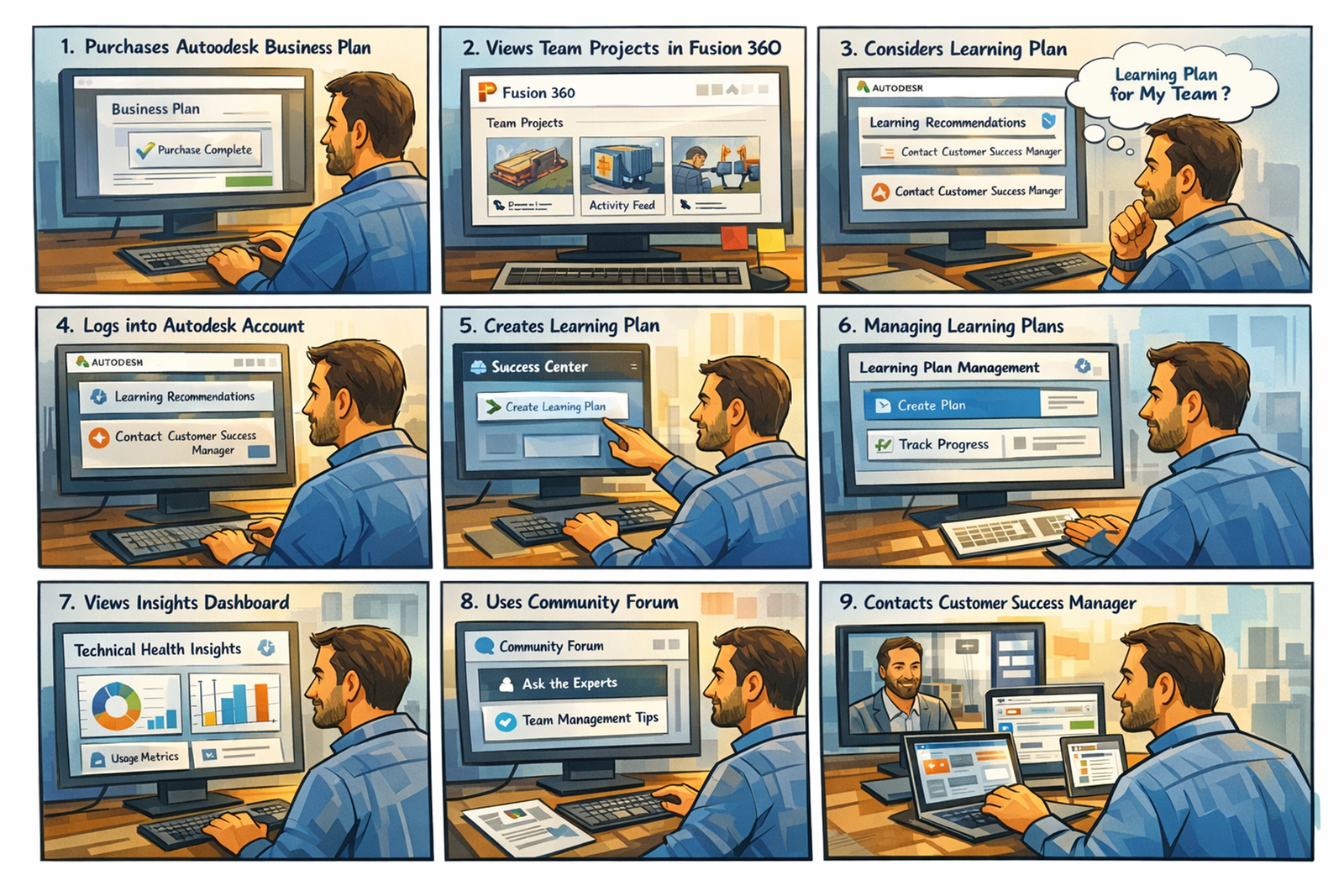
- Journey maps, service models, and customer storyboards connected digital and human moments.
Bring success into the signed-in journey
- Tension
- A separate destination could make benefits visible while creating another fragmented surface.
- Decision
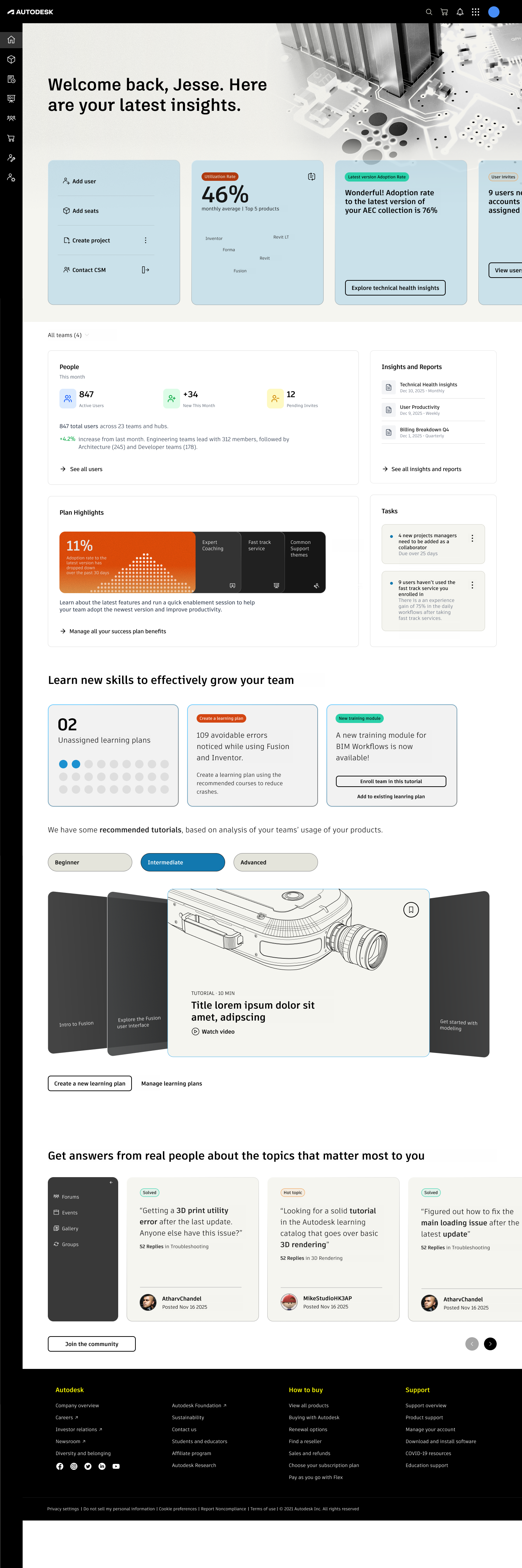
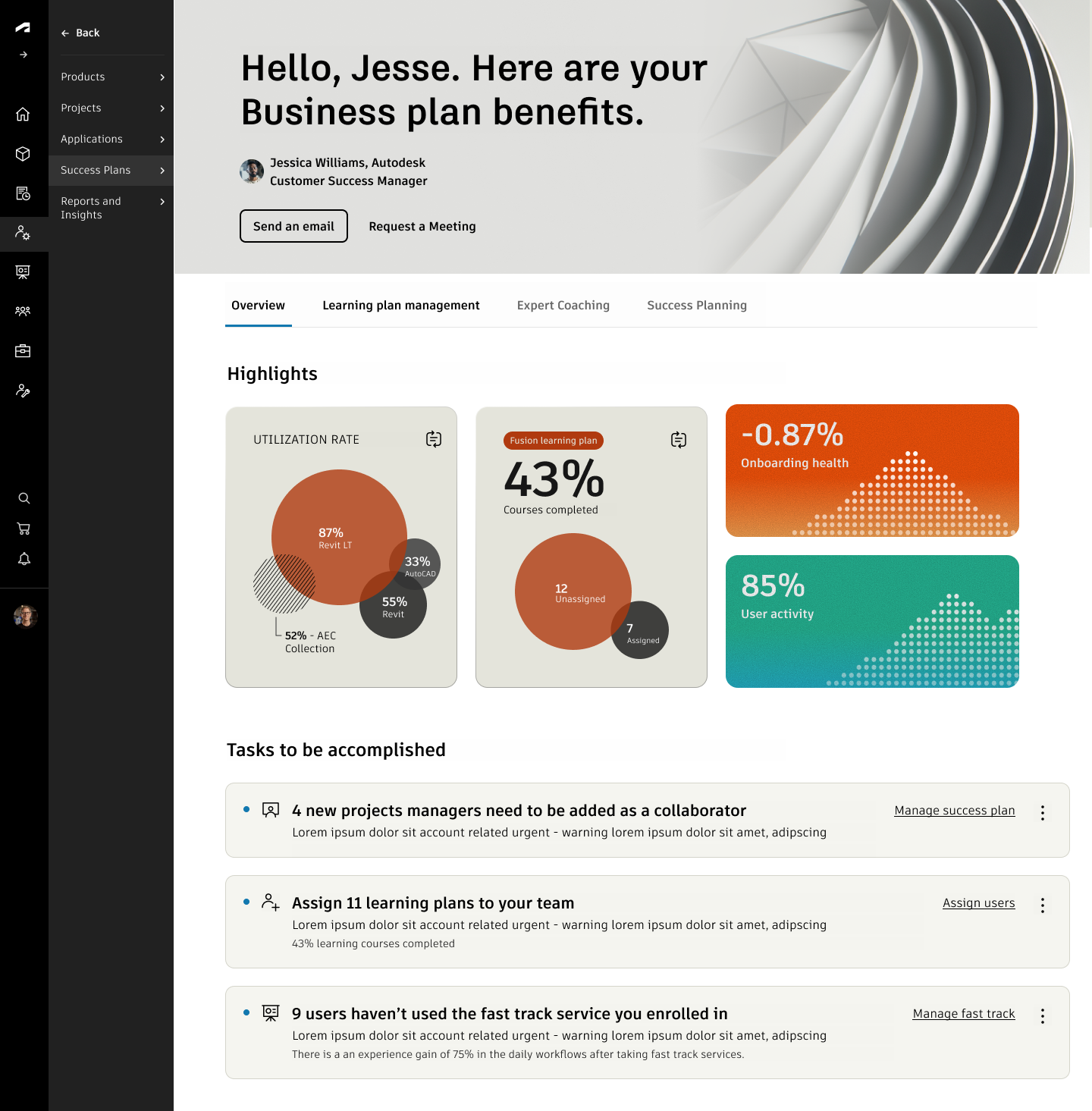
- Evolve toward an Account-embedded Success Center with contextual access to learning, plans, insights, and people.
- Rationale
- The signed-in experience already held the product, account, and usage context needed to make guidance actionable.
- Tradeoff
- Integration increased dependency on shared platform capabilities and sequencing.
- Operating mechanism
- Low-fidelity plans and high-fidelity dashboard concepts tested how related benefits could work together.
Sequence digital-first with human escalation
- Tension
- Manual services delivered expertise but could not scale to every customer need; automation alone could erode trust.
- Decision
- Use digital guidance for repeatable motions and preserve clear escalation when human expertise added value.
- Rationale
- The tiered model needed efficiency without pretending every outcome could be automated.
- Tradeoff
- Not every benefit could be digitized at the same pace or depth.
- Operating mechanism
- Weekly demos, monthly business reviews, research, analytics, and buy-versus-build decisions supported phased delivery.
What changed
Customer, business, organizational, and capability outcomes from the work.
Customer
Customer-success system
Learning, coaching, planning, support, and insight were organized around customer jobs and next actions.
Led the experience strategy and portfolio framing.Business
FY30 growth strategy
Autodesk organizational growth target supported by the Success Offerings digital experience strategy; not a result personally delivered by James.
Contributed the digital experience strategy supporting the broader target.Organization
Portfolio sequence
A phased path connected benefit awareness, integrated planning, and contextual intelligence.
Capability created
Delivery model
A scalable model for repeatable digital motions with escalation to expertise.
Attribution
Experience strategy led by James with Customer Success, Support, Learning, Research, Analytics, Product, Engineering, and business partners.
Reflection
- What worked
- Customer jobs gave distributed teams a common story and made tier differentiation easier to discuss.
- What I would change
- I would establish instrumentation and ownership for each benefit earlier so concept validation and operational readiness advanced together.
- What persisted
- The portfolio model connected digital guidance and human expertise across a multi-year sequence.
- What I learned
- Customer success becomes a product when benefits, context, actions, and escalation behave like one service system.
Supporting evidence
Selected artifacts from early framing through detailed product decisions.