Thomson Reuters · 2021–2023
Legal Platform
A coherent legal operating system
The design challenge was larger than any workflow. Customers needed matters, tasks, documents, budgets, spend, billing, analytics, and collaboration to behave like one system.
Executive summary
ProblemSeparate products, acquired platforms, different interaction models, and teams optimizing locally across an interconnected legal workflow.
StakesCustomers needed one coherent legal workflow while teams and products were organized around separate platforms and local priorities.
- Role
- Director, User Experience
- Mandate
- Lead three cross-functional product teams and align UX strategy, portfolio priorities, systems, and measurement across connected legal workflows.
- Team and partners
- Three cross-functional product teams plus design, research, product, engineering, go-to-market, and executive partners
- Scope
- A legal enterprise portfolio spanning matters, tasks, documents, budgets, billing, analytics, collaboration, and acquired products.
- Decision rights
- Led UX strategy, team direction, design vision, prioritization, and experience measurement; partnered with product and engineering leaders on portfolio and delivery decisions.
High-value tasks
Improvement across the five highest-value tasks using Pendo behavior data, customer insight, and iterative changes.
Led UX strategy and experience measurement across the product teams.Onboarding
Reduced onboarding time by redesigning workflows, decision points, and team operating practices.
Led the experience and operating-model changes with cross-functional partners.Annual growth
Company/product growth to which the three cross-functional teams and broader organization contributed; not solely attributable to design.
Aligned UX strategy with customer and market needs as Director of User Experience.The system behind the screen
Customer
Legal teams moved between disconnected matter, task, document, budget, billing, analytics, and collaboration experiences.
Business
The portfolio needed coherent value across product lines and acquisitions while sustaining growth.
Organization
Separate teams, interaction models, and discovery practices optimized locally across an interconnected workflow.
Leadership mandate
Lead three cross-functional product teams and align UX strategy, portfolio priorities, systems, and measurement across connected legal workflows.
Owned and led
Led UX strategy, team direction, design vision, prioritization, and experience measurement; partnered with product and engineering leaders on portfolio and delivery decisions.
Partnered across
Three cross-functional product teams plus design, research, product, engineering, go-to-market, and executive partners
Consequential decisions
Not a process timeline. The choices that changed the system, the tradeoffs they required, and the evidence they created.
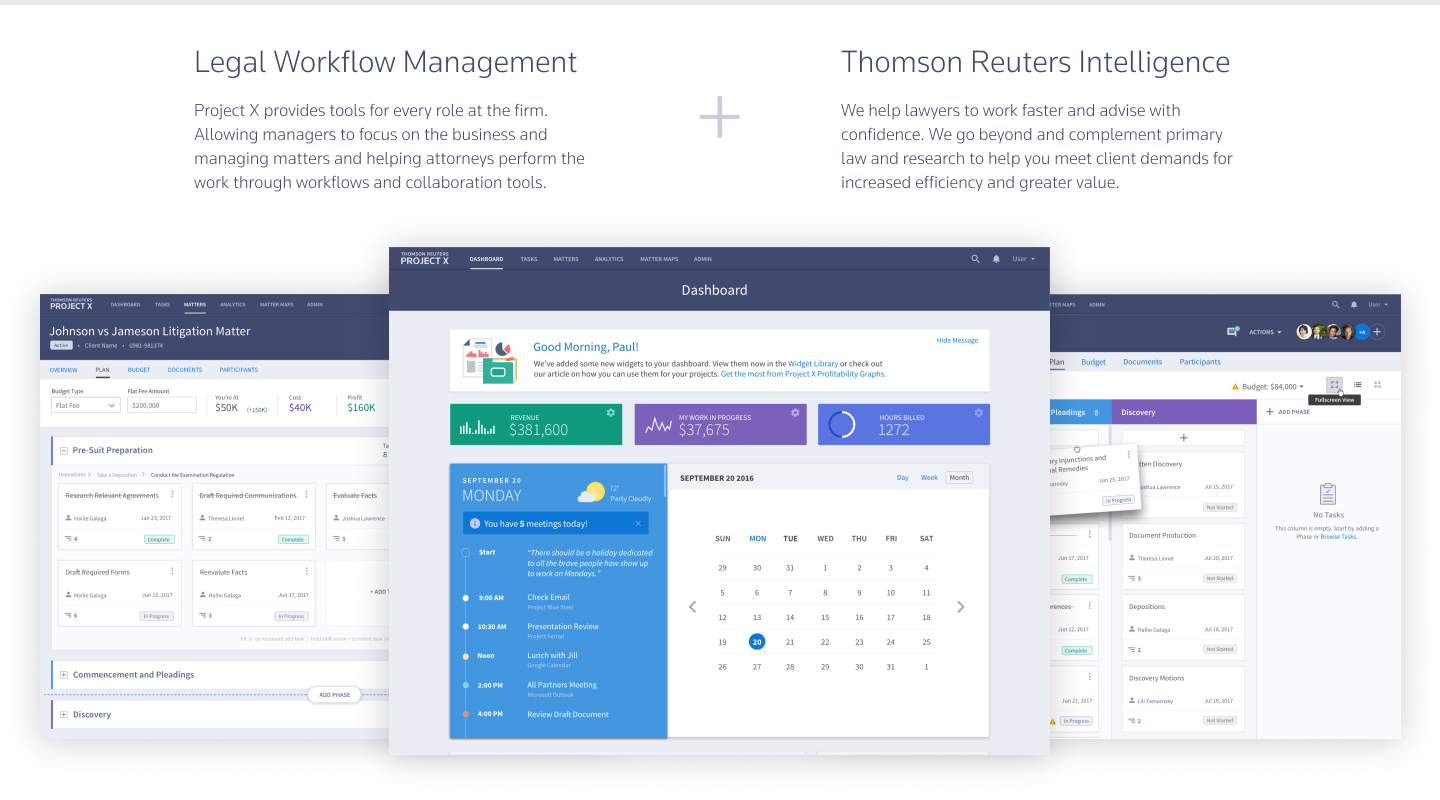
Define the portfolio as one operating system
- Tension
- Improving products independently could preserve fragmentation across the end-to-end legal workflow.
- Decision
- Frame the portfolio as an open, connected, and intelligent platform organized around customer outcomes.
- Rationale
- A shared platform story allowed product lines and acquired capabilities to contribute to one experience.
- Tradeoff
- Local product autonomy had to coexist with portfolio consistency.
- Operating mechanism
- End-to-end journeys and an executive platform narrative made dependencies and gaps visible.
Standardize the way teams discovered and decided
- Tension
- Different teams used different definitions of quality, evidence, and readiness.
- Decision
- Establish shared discovery, prioritization, experience measures, and a scalable design system across product lines.
- Rationale
- A connected platform required compatible decisions, not identical teams.
- Tradeoff
- Consistency could not become a new approval layer that slowed local work.
- Operating mechanism
- Shared goals, portfolio reviews, Pendo behavior data, customer insight, and reusable design-system patterns created a common operating language.
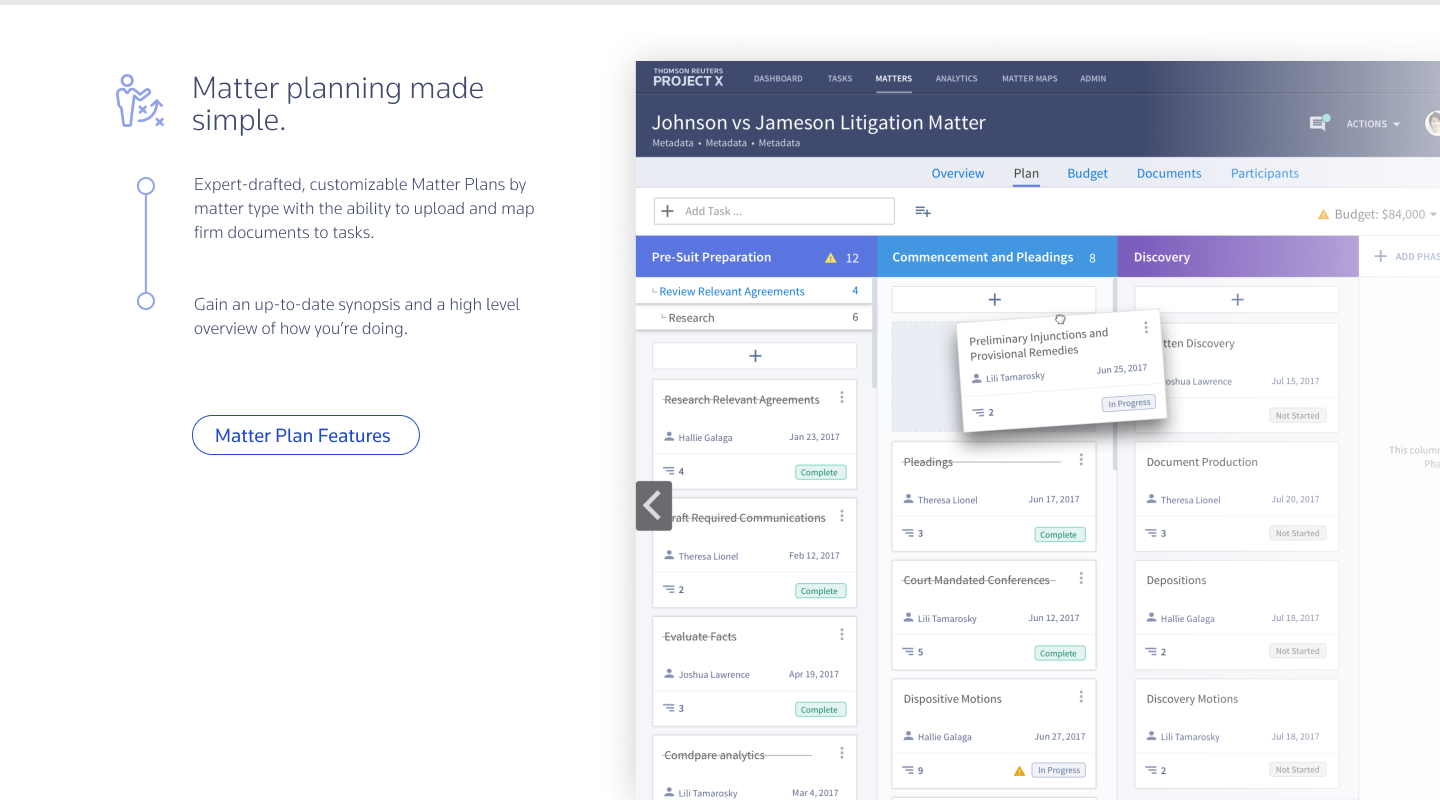
Redesign onboarding as an operating problem
- Tension
- A two-month onboarding journey reflected workflow and decision friction, not only interface complexity.
- Decision
- Redesign workflows, decision points, and team operating practices together.
- Rationale
- Reducing customer time required changing both the experience and the conditions behind delivery.
- Tradeoff
- The work crossed team boundaries and required coordinated changes beyond a single product surface.
- Operating mechanism
- Interdisciplinary ownership and explicit decision points connected product experience with internal operations.
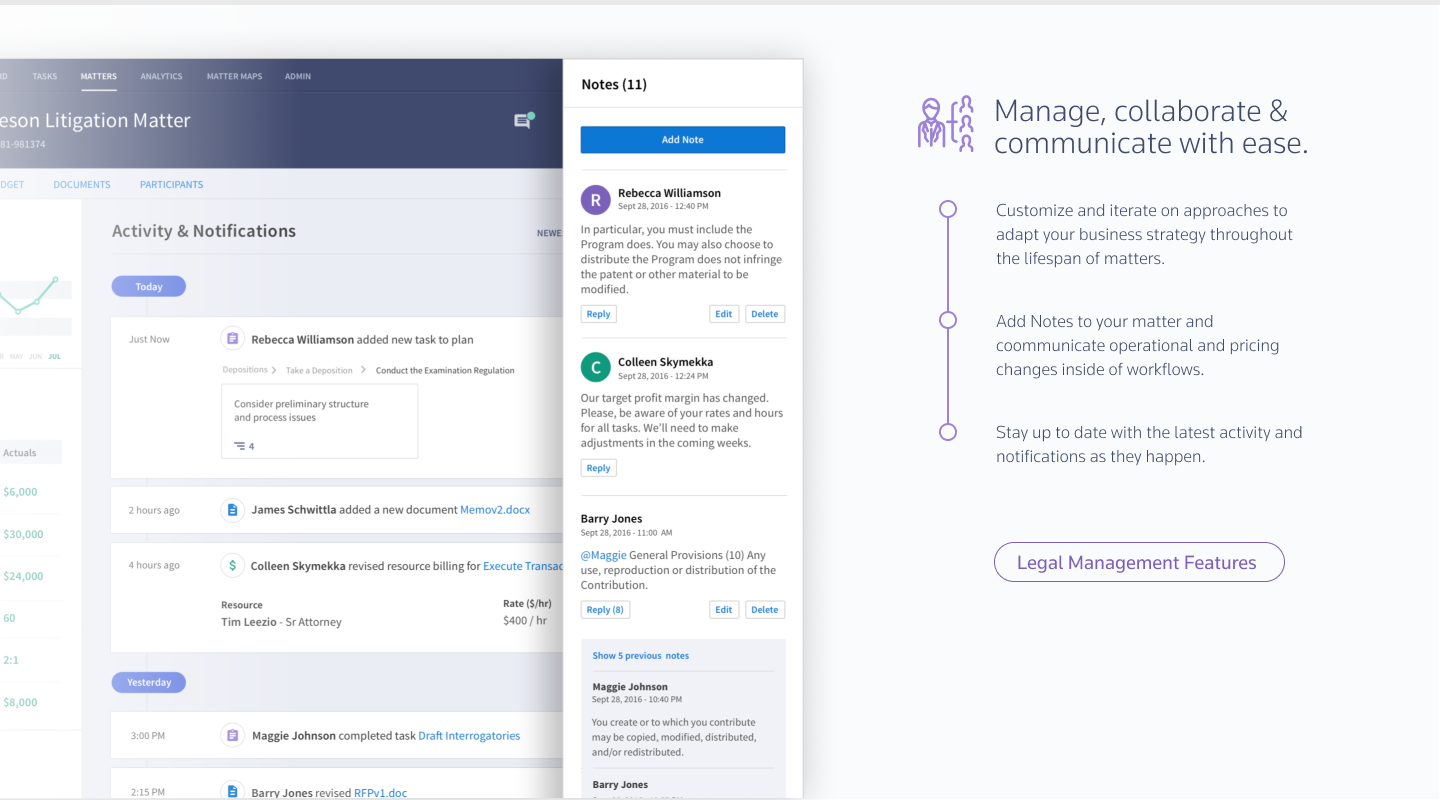
What changed
Customer, business, organizational, and capability outcomes from the work.
Customer
High-value tasks
Improvement across the five highest-value tasks using Pendo behavior data, customer insight, and iterative changes.
Led UX strategy and experience measurement across the product teams.Onboarding
Reduced onboarding time by redesigning workflows, decision points, and team operating practices.
Led the experience and operating-model changes with cross-functional partners.Business
Annual growth
Company/product growth to which the three cross-functional teams and broader organization contributed; not solely attributable to design.
Aligned UX strategy with customer and market needs as Director of User Experience.Organization
Product teams
Cross-functional teams led within a shared portfolio strategy and measurement model.
Capability created
Design system
Reusable patterns extended across product lines to improve consistency, accessibility, and delivery efficiency.
Attribution
UX strategy and team direction led by James with three cross-functional product teams, design-system contributors, research, product, engineering, go-to-market, and executive partners.
Reflection
- What worked
- A portfolio story and common evidence model let teams preserve local expertise while making compatible decisions.
- What I would change
- I would formalize acquisition-integration principles earlier so new capabilities could enter the portfolio with clearer experience and governance expectations.
- What persisted
- Shared discovery, prioritization, measurement, and design-system practices continued beyond individual releases.
- What I learned
- A connected platform is an organizational agreement before it becomes a connected interface.
Supporting evidence
Selected artifacts from early framing through detailed product decisions.